4-Way vs. 7-Way Trailer Plugs
A small utility trailer may use a flat four-pin plug for its lights. A camper with electric brakes often has a round 7-way RV blade plug. Before buying an adapter, check the connector at each end and list the functions your trailer needs while towing.
Identify both connectors
Look at the trailer plug and the socket on the truck. Take a photo of each with the cover open. A 4-way flat connector has four contacts in a row. A 7-way RV blade connector uses a round housing with flat contacts around it. Check the contact shape as well as the pin count, since other seven-pin designs use a different layout.
| Connector | Typical functions |
|---|---|
| 4-way flat | Ground, running lights, and left and right combined stop and turn signals. |
| 7-way RV blade | The basic lighting and ground circuits, plus positions for reverse lights, electric brake output, and auxiliary 12-volt power. Which circuits work depends on what is wired at both ends. |
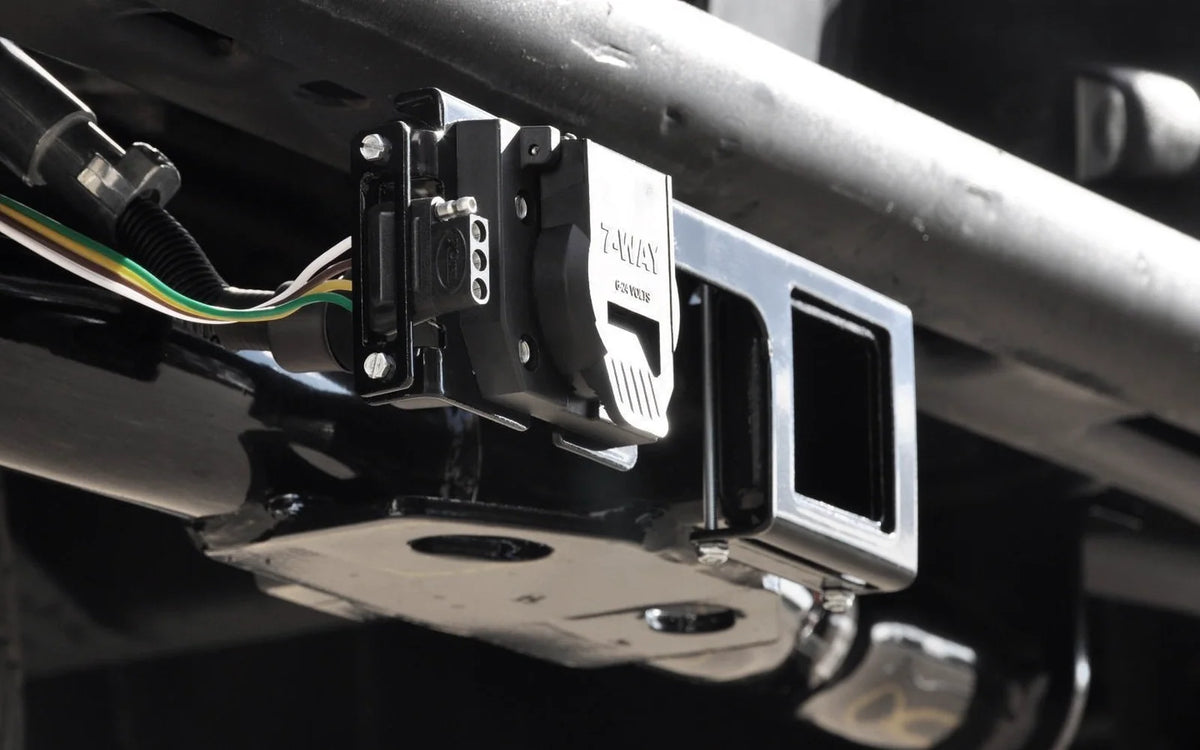
Some trucks have both styles in one bumper-mounted assembly. Check the documentation for your tow package to see which circuits are present. CURT dual-output 4-way and 7-way connector
Match the adapter to the direction of the connection
If your truck has a 7-way RV blade socket and the trailer has a 4-way flat plug, a 7-to-4 adapter can pass the lighting signals that the trailer uses. Check which side of the adapter is labeled vehicle and which is labeled trailer. CURT 7-way vehicle to 4-way trailer adapter
If the truck has a 4-way socket and the trailer has a 7-way plug, start with the trailer's equipment list. A socket with seven positions can carry extra circuits when they are wired. A trailer with electric brakes needs the braking controls and connections specified for the tow vehicle, trailer, and brake controller. A trailer that needs a charge feed or reverse signal also needs the corresponding circuit verified. Example of the added circuits in a 7-way upgrade
Check the equipment on the trailer
Look up the trailer model or ask the maker which brakes it uses. Electric brakes and hydraulic surge brakes work differently. If you have a boat trailer with a reverse lockout, check whether it needs a reverse signal. On a camper, check whether the auxiliary circuit is intended to supply a charge feed during towing. Match the circuits to the equipment you actually have.
If a truck came with a factory tow socket, verify the functions you need before you count on them. Features such as an integrated brake controller, charge circuit, fuse, or relay vary by truck and tow package. Use the owner's manual and the trailer documents to check what is required.
Test the setup while parked
Look for moisture, green corrosion, or damaged contacts. Route the cord with enough slack for turns and keep it away from exhaust parts, the road, and pinch points. Have a helper check the running lights, brake lights, and both turn signals. Test reverse lights and trailer brakes as applicable using the instructions for the vehicle and trailer. If a required function fails, resolve it before towing. NHTSA pre-trip guidance on trailer lights
The electrical connection is one part of the setup. If you are outfitting the same truck and trailer for the first time, use our guide to measuring trailer hitch drop and rise to check ball mount height on level ground.