How to Measure Trailer Hitch Drop and Rise
A pickup with a tall receiver may need a drop ball mount to tow a low utility trailer. A lower vehicle may need a rise for the same trailer. Two measurements on level ground give you a starting point before you shop.
Measure the receiver and the trailer separately
Use a tape measure, a spirit level, and a hard, level parking surface. Secure the parked truck and chock the trailer wheels. Keep the trailer uncoupled while you measure and use its tongue jack according to the trailer manual.
- Measure the receiver height. Measure vertically from the ground to the top inside edge of the receiver opening on the tow vehicle. Write this down as A.
- Measure the coupler height. Use the spirit level on the trailer frame near the tongue. With the trailer level, measure vertically from the ground to the bottom edge of the coupler. Write this down as B.
- Compare the two numbers. A receiver above the coupler calls for drop. A receiver below the coupler calls for rise. Use the difference between the two measurements as your starting offset.
These reference points are for initial ball mount selection. Follow the setup instructions for the exact mount you buy. Some systems specify their own starting measurements. See CURT's illustrated ball mount guide for the receiver and coupler reference points.
Work out your starting drop or rise
| Receiver height | Level coupler height | Starting offset |
|---|---|---|
| 23 in. | 18½ in. | 4½ in. of drop |
| 17 in. | 20 in. | 3 in. of rise |
| 19 in. | 19 in. | No rise or drop indicated by the initial measurement |
When a measurement falls between settings, check which positions the mount actually offers and how its maker specifies the adjustment. Use the initial numbers to narrow your choices, then check the trailer again when the truck and trailer are loaded and coupled for travel. The suspension can settle under the tongue load. The vehicle and trailer manuals govern the final setup.
Match the mount to your truck and trailer
- Receiver size. Confirm the inside opening of the receiver and the shank size the manufacturer specifies. A truck's model name alone won't identify the receiver on every configuration.
- Ball size. Match the size marked on the trailer coupler to the correct ball. Check each trailer separately if you tow more than one.
- Weight ratings. Compare the loaded trailer weight and tongue weight with the applicable ratings of the vehicle, receiver, mount, ball, and trailer. Use the lowest applicable limit for each weight rating.
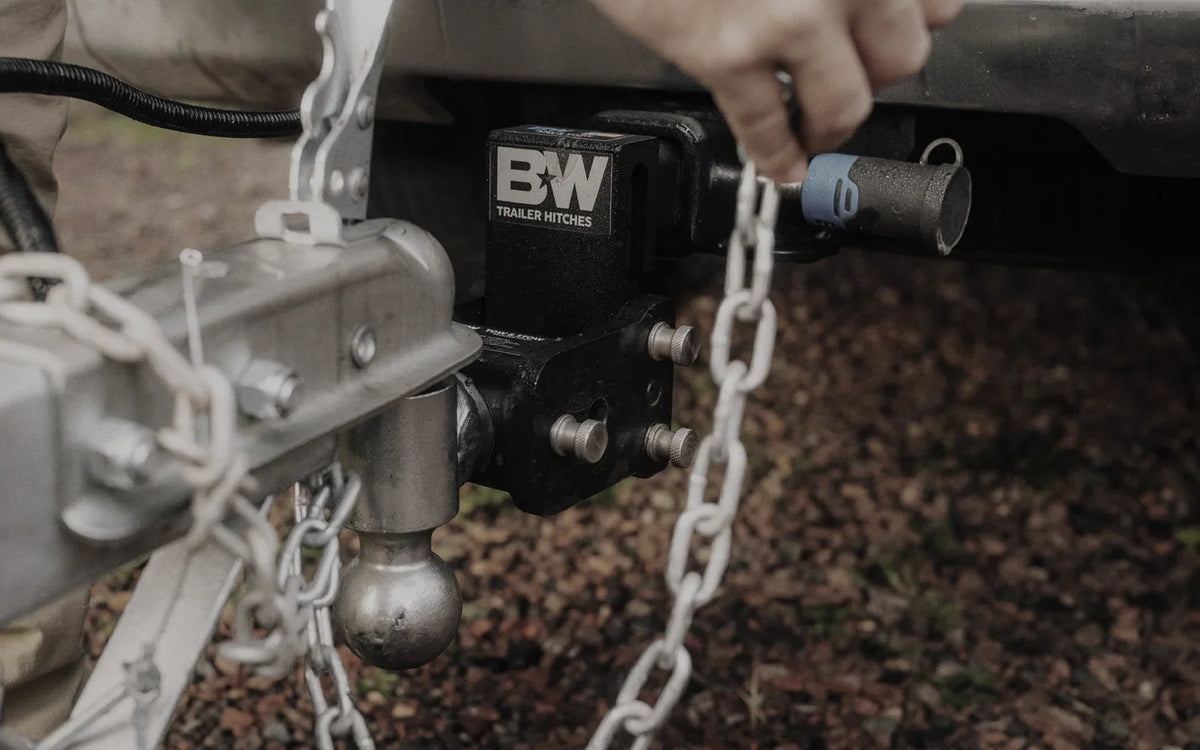
- Ground and tailgate clearance. Check the mount's clearance in the position you intend to tow in. If your tailgate folds down toward the receiver, also check clearance before opening it. B&W offers different mount profiles for certain folding tailgates. B&W Tow & Stow fitment information
An adjustable mount is useful when the same truck pulls trailers with different coupler heights. For a setup that requires a weight-distribution hitch, follow that system's instructions and the recommendations in your truck and trailer manuals.
Check the setup before you drive
After coupling, step to the side and check the loaded trailer's angle against the vehicle and trailer instructions. Confirm the latch, pins, safety chains, and electrical connection are secured as instructed. Test the trailer brake lights and turn signals with a helper before departure. NHTSA pre-trip guidance
Have the receiver size, ball size, loaded trailer weight, tongue weight, and rise or drop measurement ready when you browse trailer hitches and ball mounts at Autoshopping24.